


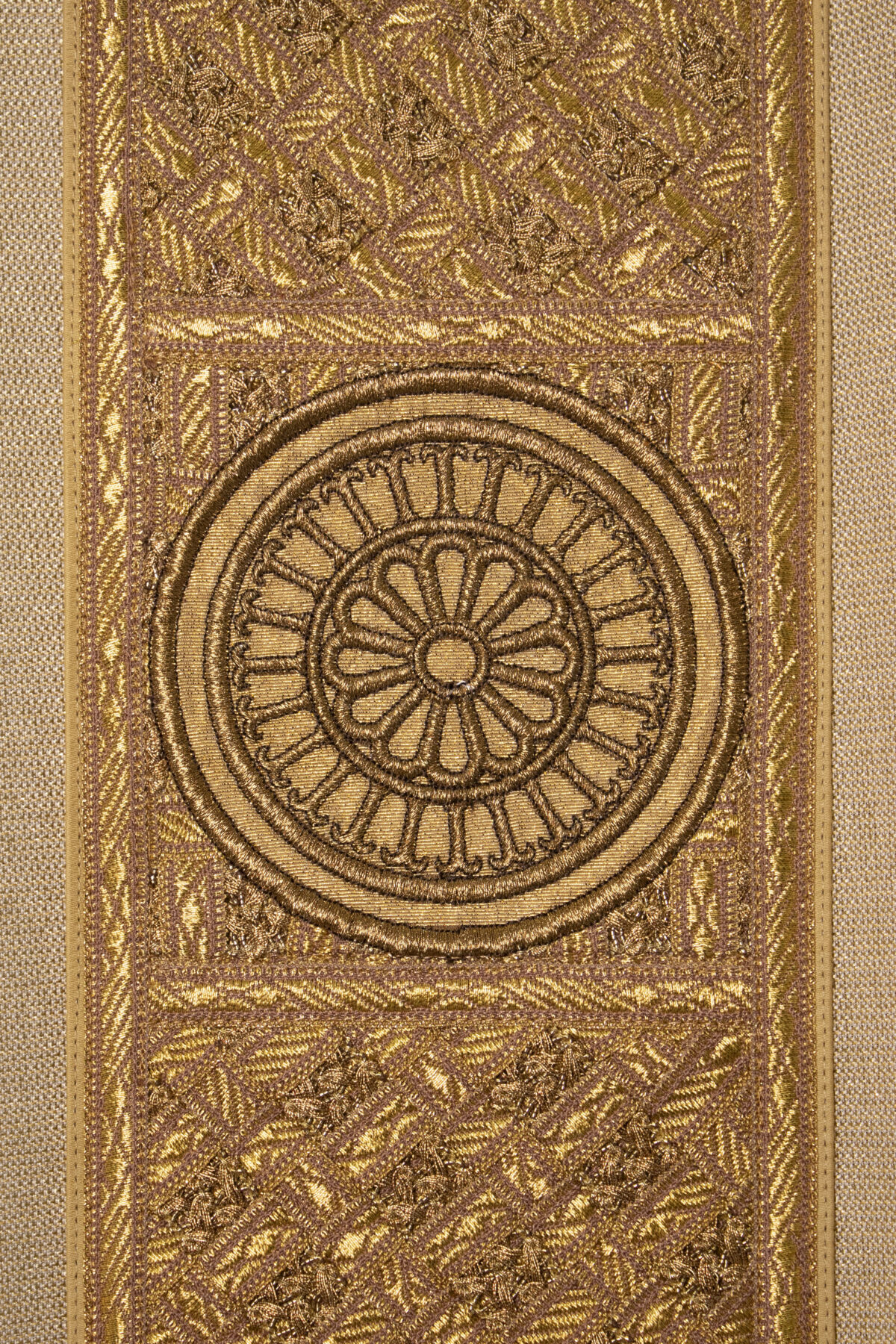
The Abbey of San Pietro in Assisi represents one of the most significant examples of Umbrian Romanesque architecture, characterized by clear lines, balanced proportions, and a use of material free from excessive ornamentation.
The project originates from a reinterpretation of the rose windows on the façade, understood as a geometric structure even before being considered a decorative element. The design is not replicated, but reworked to maintain coherence with the original architectural language.
The textile intervention develops through harmony: the circular motif is adapted to the surfaces of the stole and the altar furnishings, preserving compositional continuity among the different elements of the vestment.
Liturgical set composed of:
Antique gold chasuble made of cotton/viscose/lurex fabric.

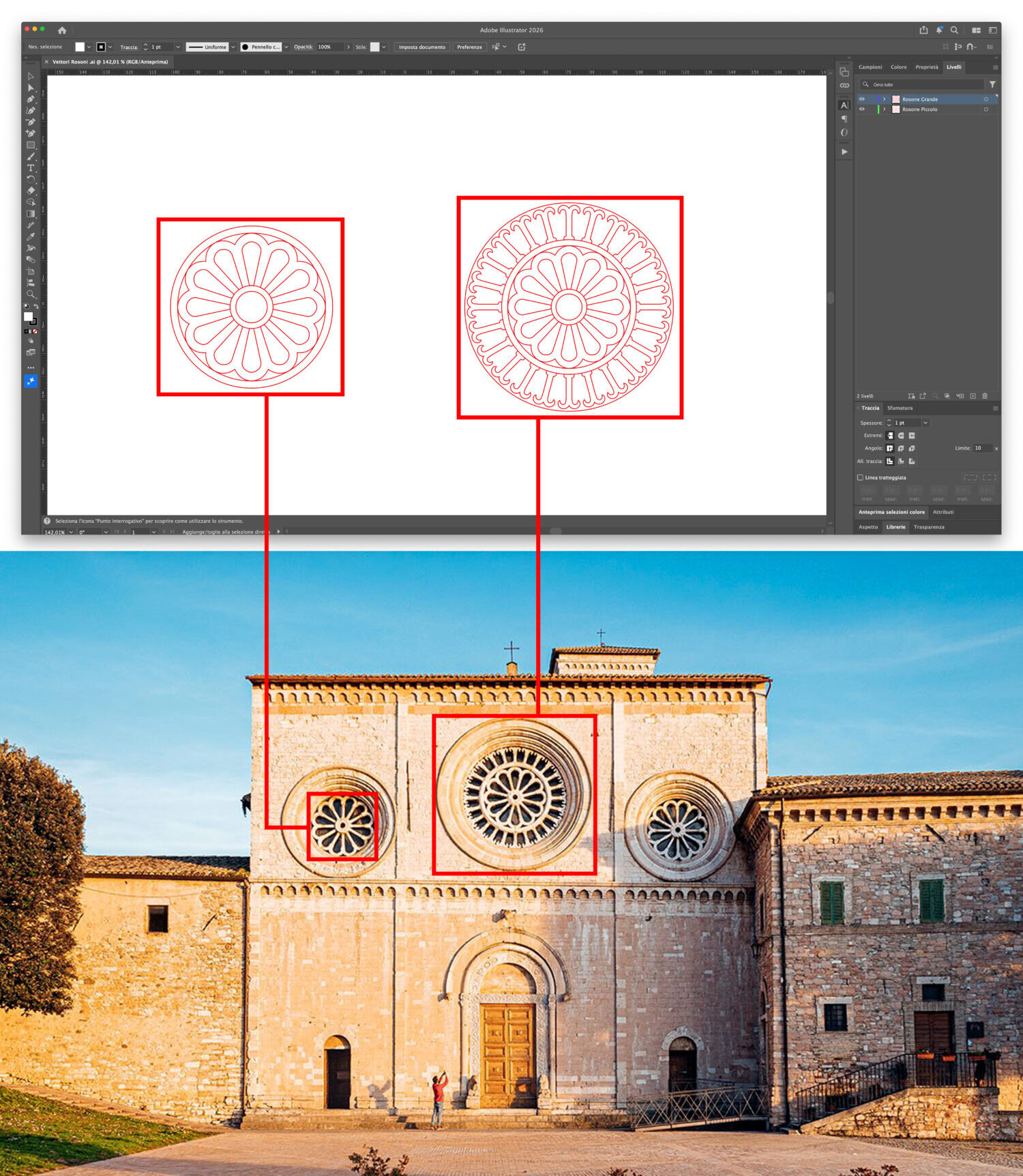
We took the rose windows of the Romanesque façade and analyzed their geometric construction, observing proportions and the distribution of solids and voids.
We started from these geometries to develop the circular motif, adapting it to the dimensions of the chasuble and the altar elements.
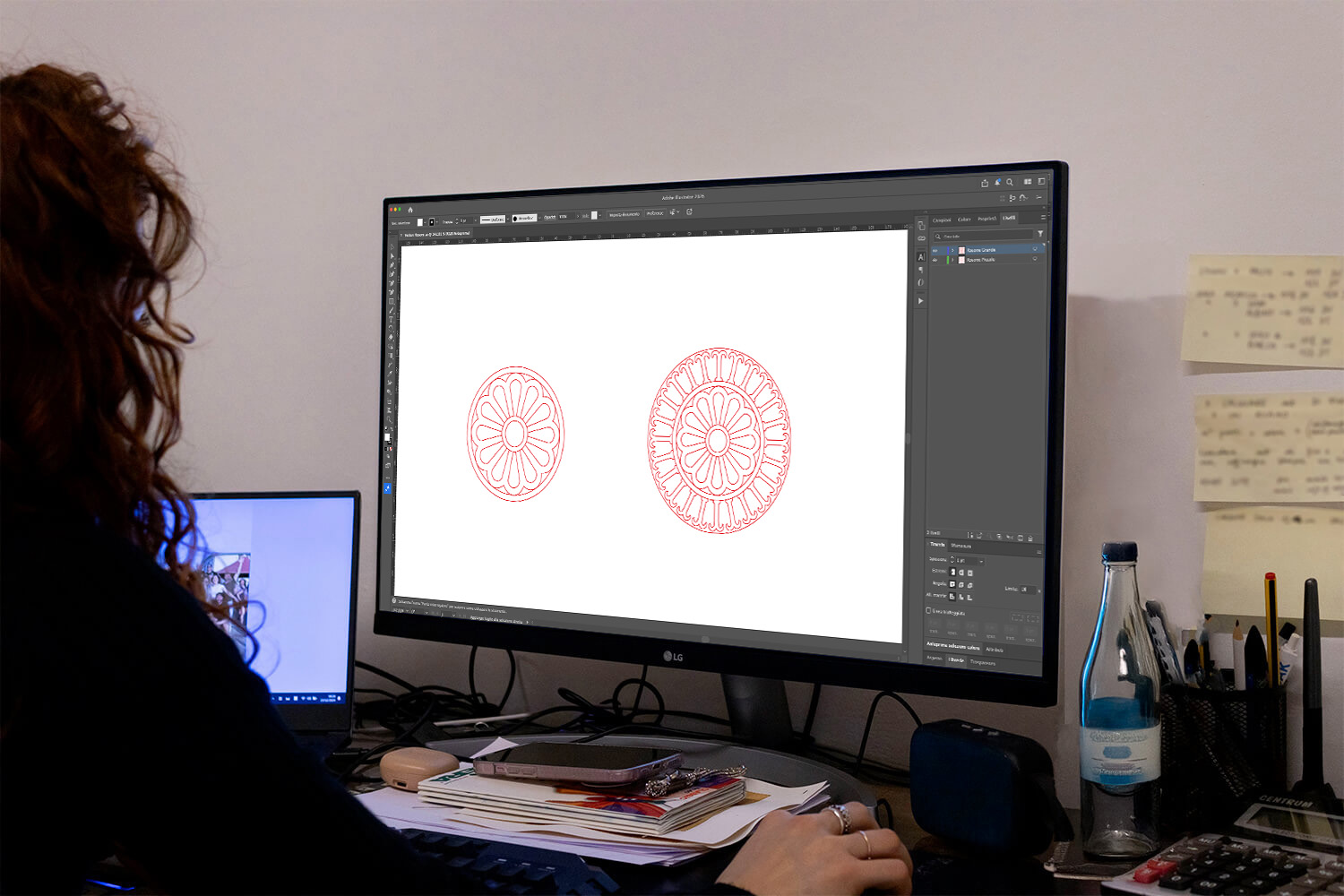
Artisanal craftsmanship and development of the embroidery, through to the final assembly of the vestment and the overall evaluation of the ensemble within its context.